We just had an incredibly crappy Christmas vacation – and I mean that in a positive way. Allow me to clarify.
As the holiday break was approaching, I was feeling like I’d had enough of the chilly and rainy weather in Toulouse. (Despite living in France the past 7.5 years, I’m a Southern California girl through and through. I thrive in sunshine. ☀️) Sure, it’s beautiful in the Southwest of France a lot of the time, but after days upon days of misty rain – the kind where you can’t stay dry, even under an umbrella – I was longing for blue skies and some warmth.
We were about to begin our holiday break and Jonas and I were looking for some fun family activities for us to do. There was a Festival of Lanterns in Montauban (enticing, but not in the rain) or the Christmas market with a boat ride and cool light projections around the city of Castres (also a lovely idea, but not so enjoyable in the rain). We also discovered there was an entire Christmas Village on the beach of Le Barcarès, complete with an ice skating show, traditional market, sledding, a VR sleigh ride and an ice sculpture gallery. You think I’m going to mention the rain here, but no. The thing that bothered me was that it was going to cost 60 euros to get in and we’d already been to a bunch of French Christmas markets and events leading up to the holiday.
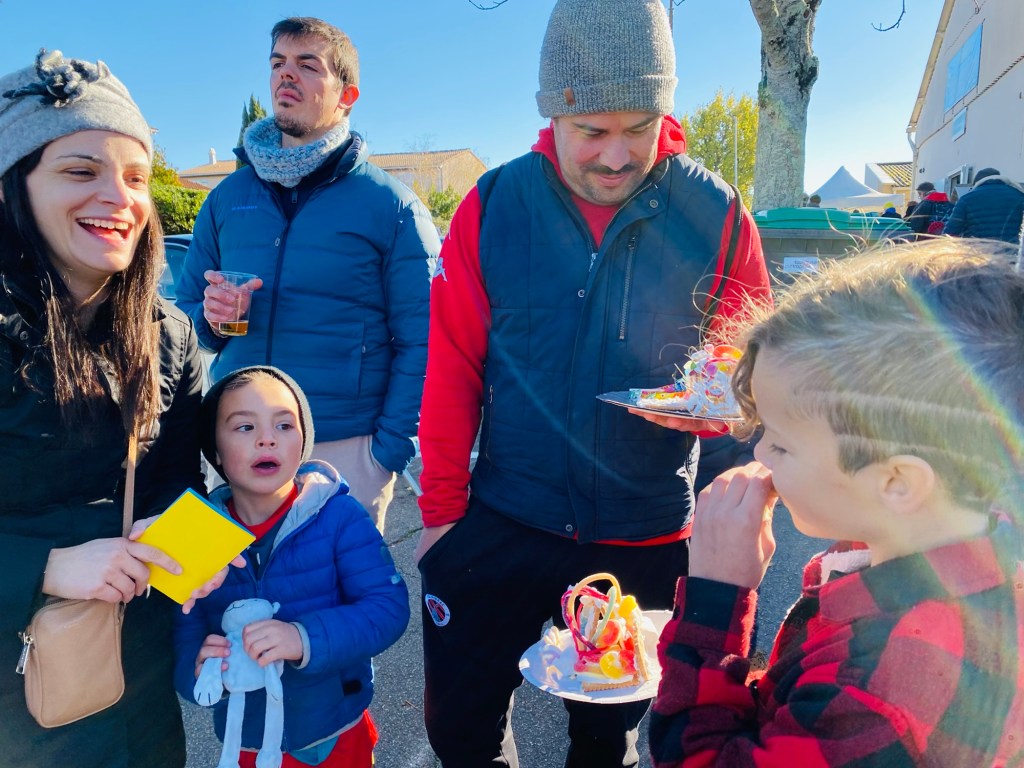
I was looking for something different, and boy did I find it. I was ready to chase the sun so I Googled “Costa Brava Christmas.” The top result was an article with a list of holidays like St. Stephen’s Day and El Sants Innocents (similar to April Fool’s Day) that both coincided with our week off. I read on and learned how many towns there do elaborate live nativity scenes that you can walk through called pessebres vivents, and the biggest and oldest one on the Costa Brava was happening in a medieval city called Castell d’Aro on December 26th. Spending the day at the beach and the evening walking through a pessebre vivent (dogs allowed 🐾) sounded amazing. I was already sold.
I continued scrolling down and my eyes did a double take as I gazed upon an image of a small male figurine with his pants down in a squatting position taking a poop. I thought, “¿Qué es esto?” Or should I say, “¿Què és això?” (We are talking about Catalonia after all.)

I scanned the text and this character was identified as el caganer, or “the pooper,” which is a figurine typically placed in or near nativity scenes in Catalonia. The author went on to say, “I know that at least some of the pessebres vivents include a live caganer, so if you do go along to watch, make sure you keep your eyes peeled for what is truly a weird Christmas tradition.” I read the words but my brain couldn’t reconcile what was being said. What does a pooping villager even have to do with the nativity and how would that play out live???
I was ready to do more research to find the answer but I got distracted by the next image of a defecating Christmas log. That’s right. It’s called Caga Tió or more formally, Tió de Nadal. Apparently children hit the log with sticks to make it poop out treats like nougat.
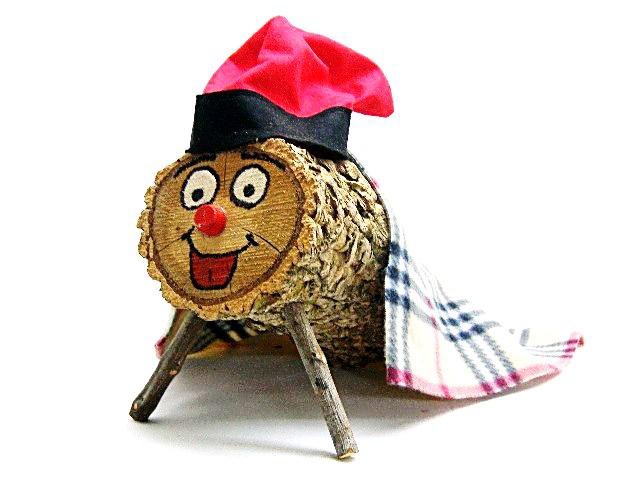
Photo credit: El Tió Bufó
They even sing a delightful song to encourage Caga Tió to give up the goods.
It goes:
“Caga Tió (Poop log), caga torró (poop out nougat), avellanes i mató (hazelnuts and mató cheese), si no cagues bé et daré un cop de bastó (if you don’t poop well I’ll hit you with a stick). Caga Tió (Poop log)!”

Photo credit: Creative Commons
I was confused and intrigued. Thankfully I’d already scheduled an appointment with my therapist the next day so I could process this.
Here’s the deal. I’ve only read a few articles (like Why do Catalan Christmas traditions involve poo?) and from what I can gather, the nativity scenes there feature more than just the birth of Jesus in a manger. They often encompass an entire city and include rural Catalonian landscapes. The caganer represents fertilization and hopefully a good harvest for the year to come. During the holidays, families hide the caganer in different spots and encourage children to find him. Kind of like Where’s Waldo? But version número dos. It’s not meant to be offensive in any way, and for the Catalonians, it isn’t. In fact, people have been doing this for so long (since the 18th century), that they simply can’t imagine or accept a nativity scene without a caganer.
I chuckled when I read a story about a life-sized nativity scene in Barcelona that excluded the caganer because the city had recently issued a new ordinance making it illegal to defecate and urinate in public. They thought having a pooping figure there would send mixed messages. People were outraged that it was omitted and claimed, “A nativity scene without a caganer is not a nativity scene.” Someone suggested the authorities place a large figurine of a police officer issuing a ticket to the caganer. They said this solution would “respect tradition,” educate the public on how the ordinance would be enforced and encourage people to obey the laws. After a public campaign called Salvem el caganer (Save the caganer) and widespread media criticism, that bare bottom was welcomed back into the nativity scene the following year.
After learning all these details, it was clear where we would go on our break. On December 26th we packed up our car and headed south to the Costa Brava. It was only about a 3-½ hour drive and we arrived with a few hours of daylight left. We booked a room right on the beach in Platja d’Aro with an insane view. (Just one of the perks of traveling in the off-season!) It was so breathtaking, I couldn’t stop taking pictures.
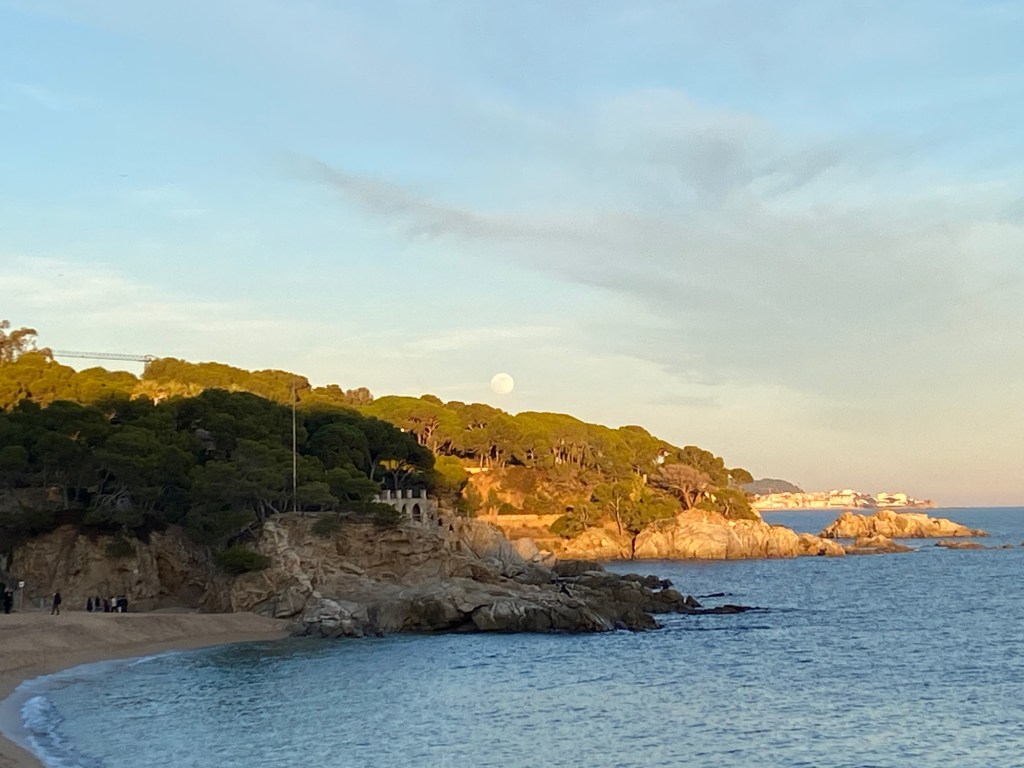

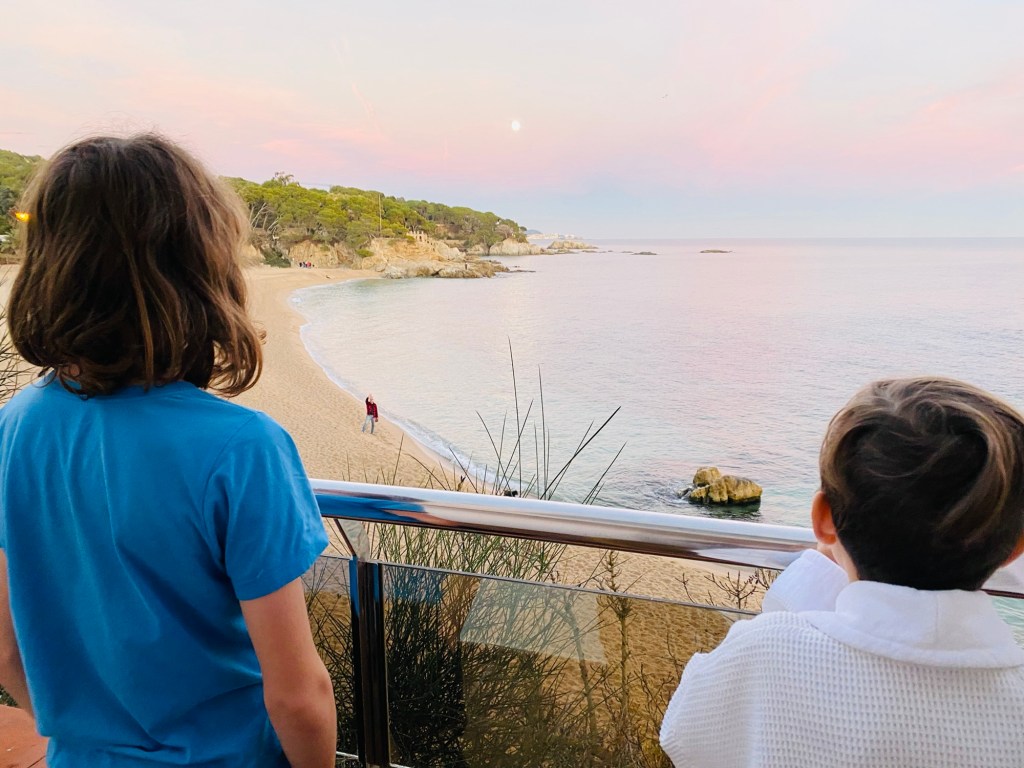

The beach nearby was an enclosed cove, perfect for CheChe to explore. She ran back and forth and nipped at the waves until the sun went down.
Soon after, we headed to the town of Castell d’Aro. We saw a HUGE line of people waiting to be let into the pessebre. We bought our tickets from a small booth and hoped the line would move quickly. It was slow going at first, but we were entertained by a jovial, slightly drunk Dutch guy who told us he had a Staffy when he was younger that looked just like ours. He gave CheChe lots of cuddles and she was thrilled. Rhône and Rocky were not so thrilled to be stuck in line, but perked up when we came upon a stand selling churros y chocolate. (They do eat much later in Spain and the boys were getting a little hangry.) It was the perfect snack to provide warmth and sustenance.


The pessebre was really beautiful. We walked through the winding streets of the medieval town passing many people in traditional garb and then exited the walls into a valley behind that twinkled with lights.
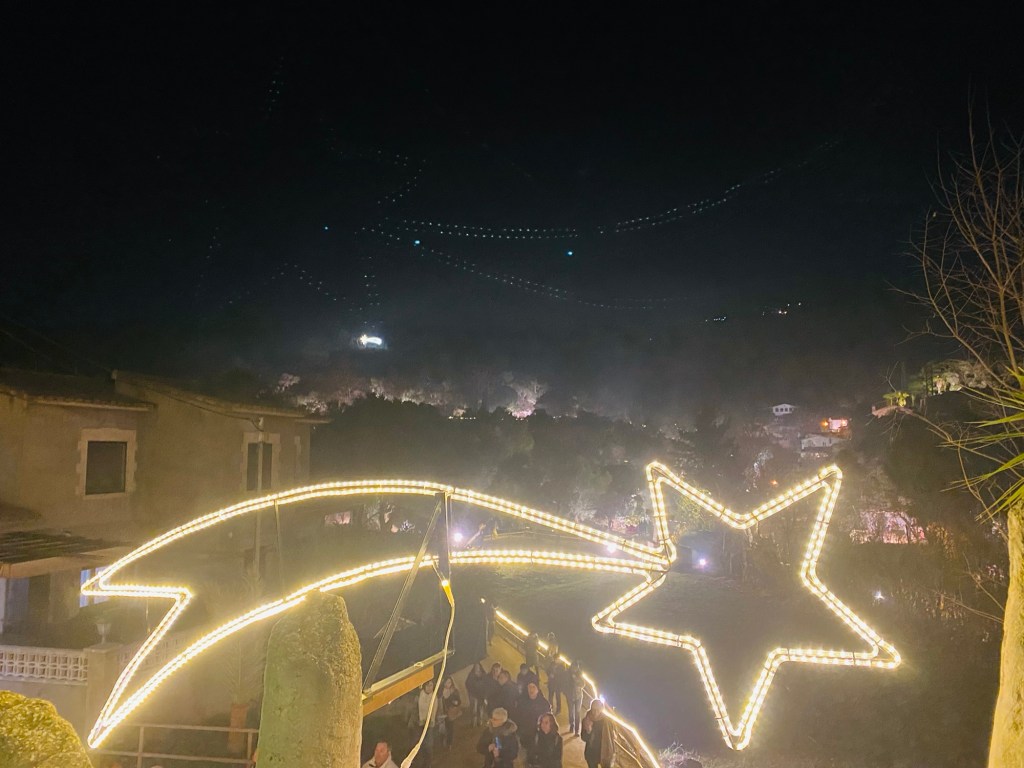
There we followed a long trail and saw bits of the nativity story mixed in with pastoral scenes. This pessebre has been happening since 1959, and over 400 people/characters participate each year.

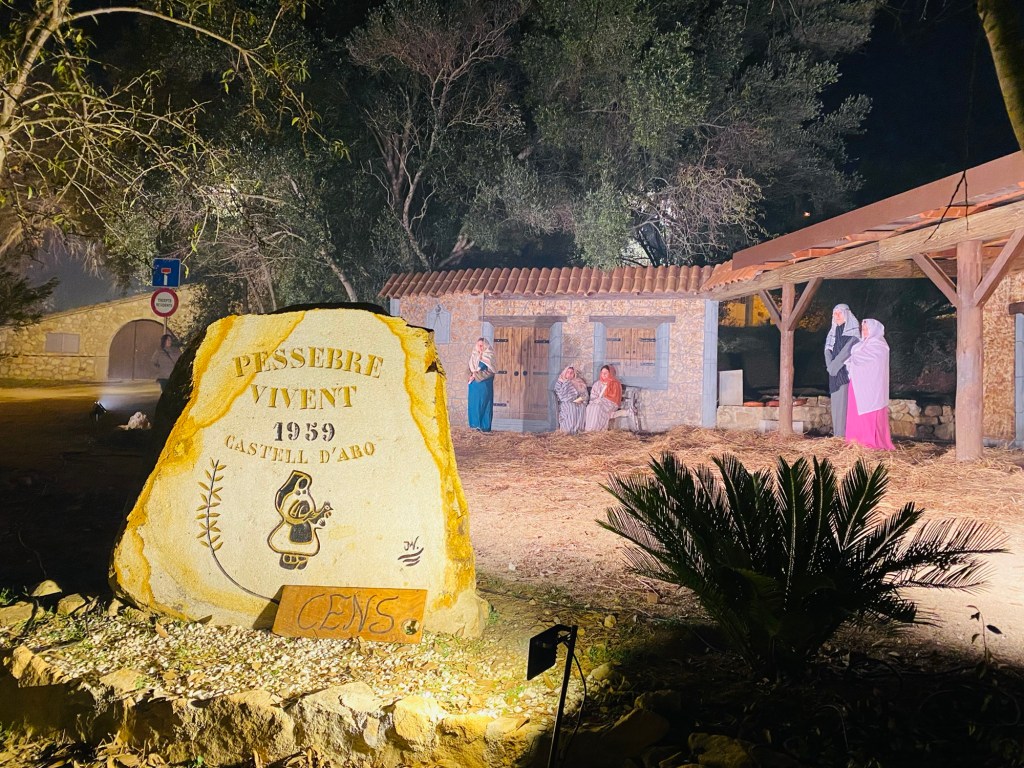


I was enjoying the various scenes when Jonas suddenly announced, “I found him. I found the caganer.”
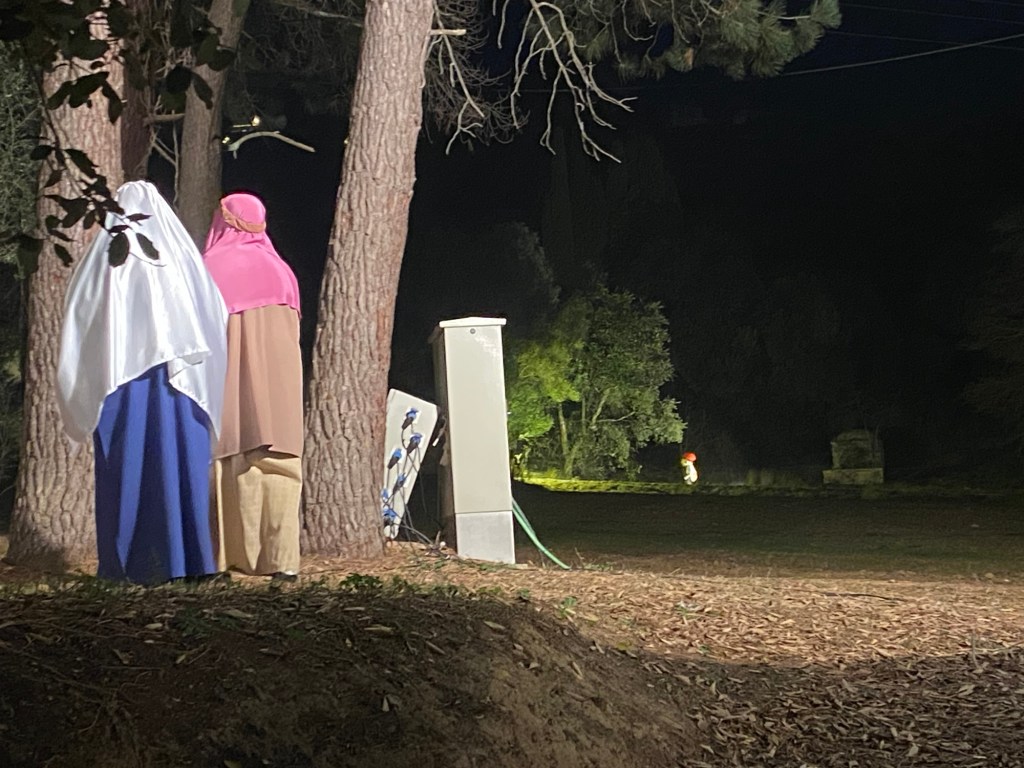
There in the field with its own bright spotlight was a huge pooping statue. There was a break in the path and direct access to the field so we moved closer to inspect. Rocky looked curious and disgusted as he approached the caganer’s exposed backside and a very large pile of poop.

He cautiously tapped the caca with his toe and then teased, “Ewwww, it’s real!” I almost believed him, but I don’t know any creature in Catalonia that could create a perfect coil that size. When the investigation was done, we returned to the path and were informed by Jonas that CheChe had added her own fertilizer to the field. Defying tradition, Jonas bagged it up and threw it in the trash.

After the pessebre, we drove back to Platja d’Aro and ate dinner at a great little restaurant and craft beer spot called Craft Room. It happens to be run by a guy from SoCal named Jeff who has lived in the area for over 20 years. We chatted with him about his restaurant, California, salsa recipes and his time living abroad. Of course the subject of the caganer came up, and he enlightened us a bit more about Caga Tió, telling us how families cover the backside with a blanket and joke with the kids that it stinks underneath because Caga Tió has left some gifts/droppings.
The next day we hoped to see a Caga Tió in person at the Christmas Market in Girona (they usually sell them there), but the weather was soooo nice at the beach, so we decided to spend some more time there.
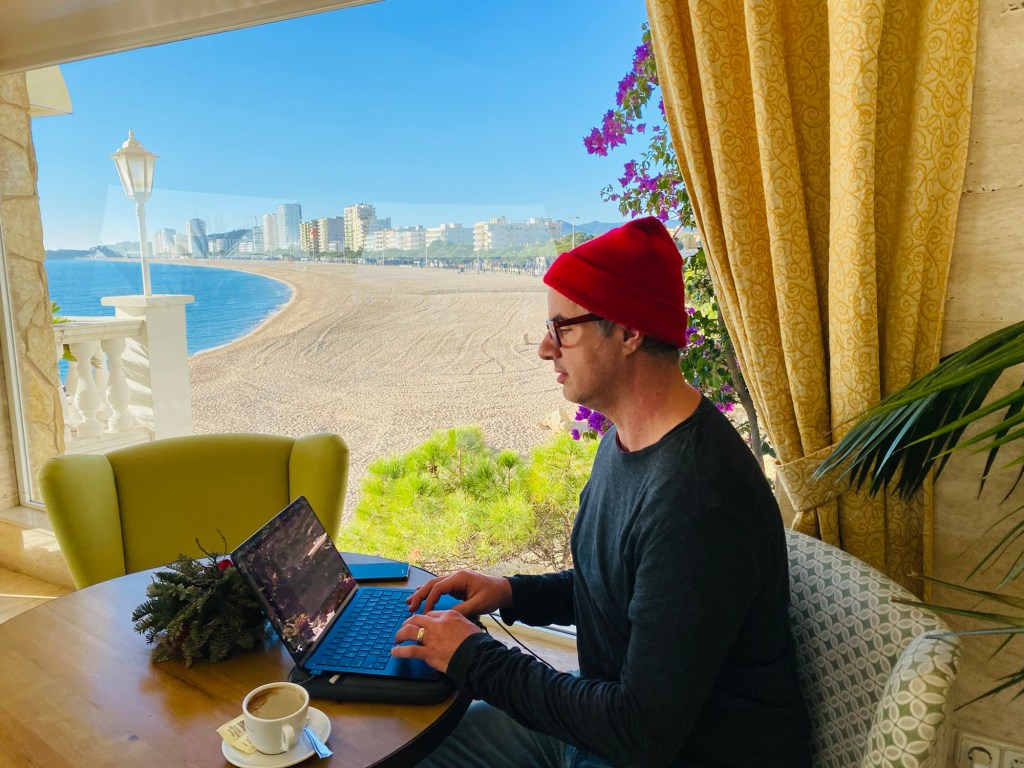
Just kidding. This is not the norm.
Jonas worked from the hotel in the morning while the boys, CheChe and I walked along the coastal path to a cove with turquoise waters called Cala del Pi.


We passed another small beach on the way where two ladies were sunbathing nude. Rhône turned to me, simply said, “Europe” and continued walking. 😆 The Cala del Pi was stunning. R+R climbed rocks while CheChe played in the water and repeatedly approached a Spanish family. She’s always making new friends.

After a late checkout, we had lunch in town, stopped by a shop suggested by Jeff called Caganer.com (it was closed but we saw all kinds of celebrity caganers in the windows) and then drove up to our next destination: a tiny town overlooking the Mediterranean called Sant Martí d’Empúries. In addition to some homes within the walls, this town has 1 church, 3 small restaurants and 1 gift shop. That’s it.

It’s about a 10-minute walk from the Greek and Roman ruins of Empúries, which we planned on visiting the next day. We didn’t know if it was because of the holidays, the winter season or what, but all the restaurants closed at 7 pm. Thankfully we had gone grocery shopping and we were able to prepare a nice little meal in our Airbnb.
The next day went by so fast. We spent most of the morning walking around outside. The boys were determined to get to the end of a long rock jetty. Once that mission was complete, it was time to find lunch.

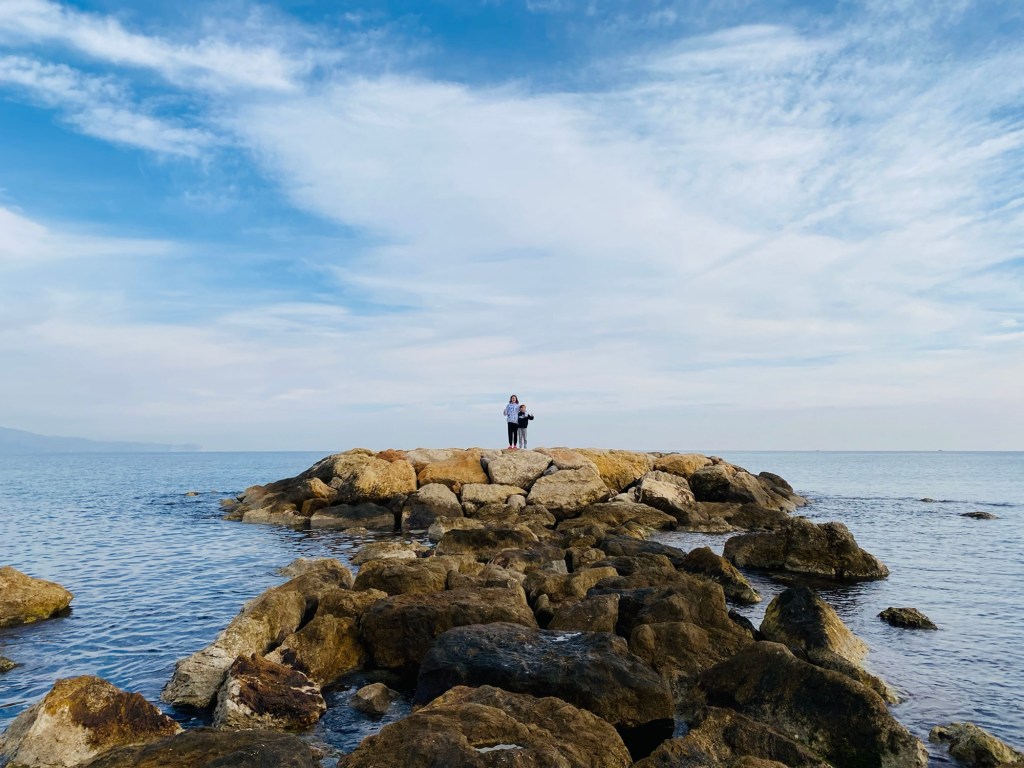
We drove to the nearby town of L’Escala and almost everything was closed for the winter. We walked around for a half hour, found an excellent Thai restaurant called Marcalma and after a delicious, filling meal, we couldn’t even imagine going to taste anchovies at the SOLÉS factory like we planned. We didn’t have enough time to properly visit the Greek and Roman ruins as they closed at 5 pm, so we decided to postpone that ‘til the next day.
In the morning, I took CheChe for a walk. I usually take one or both of the boys with me but they were sleeping in.

Che was sniffing around in a small, walled garden (a couple of cats had run in there and climbed the walls) and as I daydreamed and looked around, I was surprised to see an older man sitting on a bench writing in a journal. He was so quiet, I didn’t even notice him when we walked in. It’s been a long time since I’ve sat down in a peaceful place and written something with pen and paper. Come to think of it, it’s been ages since I’ve journaled or written something just for fun. I was inspired to set aside some quiet time to write freely again – hence this li’l story I’m sharing!
After we checked out of the Airbnb, we walked along the coast to the ruins of Empúries. If you have kids, maybe yours would be into them, but mine were more into the idea of running through them and playing hide-and-go-seek, which we forbade.

We then had one 13-year-old who wanted to be on his own and an almost 10-year-old who was kind of into the historical audio guide. We learned a couple tidbits of information, like if a name or a word has ‘eu’ at the beginning of it (e.g. Eugene or Europe), it comes from Greek. The prefix means “good” or “well.” And if a statue is found in a place where the ancient Greeks once were, like this part of the Costa Brava, it usually means there is a temple nearby.

They did indeed find a statue here that they believe represents the god of medicine, Asclepius. The statue was impressive, especially homeboy’s footwear. They also found a lady’s carved feet and she had some equally stylish sandals.


Before leaving the town of Sant Martí d’Empúries and heading home, we stopped in the small gift shop called Odyssea. They had all kinds of antique toys, jewelry, trinkets and – yep – caganers. The woman who owned the store asked me in English if I knew about the tradition and I said, “Oh yes.” She showed me some that were made in the ‘60s and a few newer ones modeled after famous people. I looked in the glass case and asked, “Who is the blond lady with the glasses?” She replied, “That is a teacher. It reminds us that everybody is sh!##ing.” I nodded.

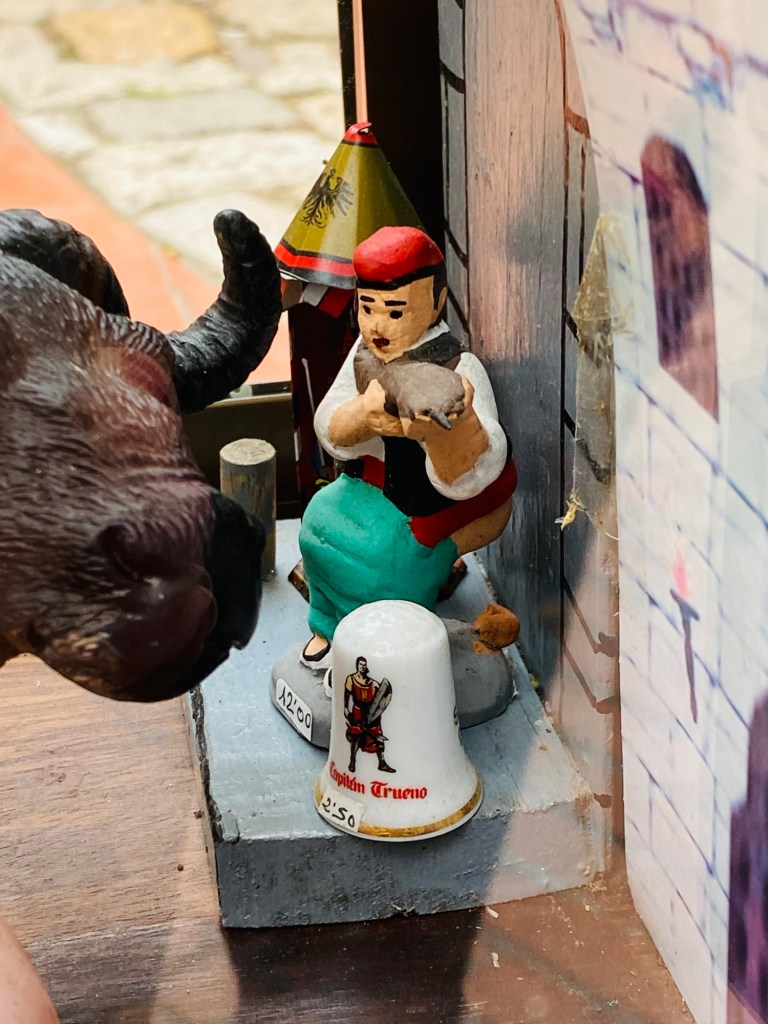


I looked at everything in the case and decided to buy myself a wind-up caganer toy that does flips. I keep joking with the boys that this is MY toy and only I can play with it. Nothing like a cheeky tchotchke to remind me of the quirky and layered Catalonian traditions we had the pleasure of learning about first-hand. After all these experiences, I’m sure we’ll never forget our one-of-a-kind Christmas vacation on the Costa Brava.
 Brooklyn Bisou💋
I giggled, chuckled and laughed real loud throughout your post! You have such a gift. I’m glad you got inspired by the old man in the peaceful spot along the coast to once again treat us all to one of your engaging tales of adventure. Memories made that your boys will laugh about for many years and share with their kids some day😂
Sal Gal in SoCal
LikeLike
EL CAGANER🤷🏽♀️💩🤦🏽♀️
FABULOUS LIVING EXPERIENCE 💝💐🕊️🎉LOVE ALWAYS
LikeLike
With the caganer representing fertilization, I hope you stayed away from the local produce!
LikeLike